Ghost Quota: How a Missing Foreign Key Quietly Lowers a Sales Ceiling
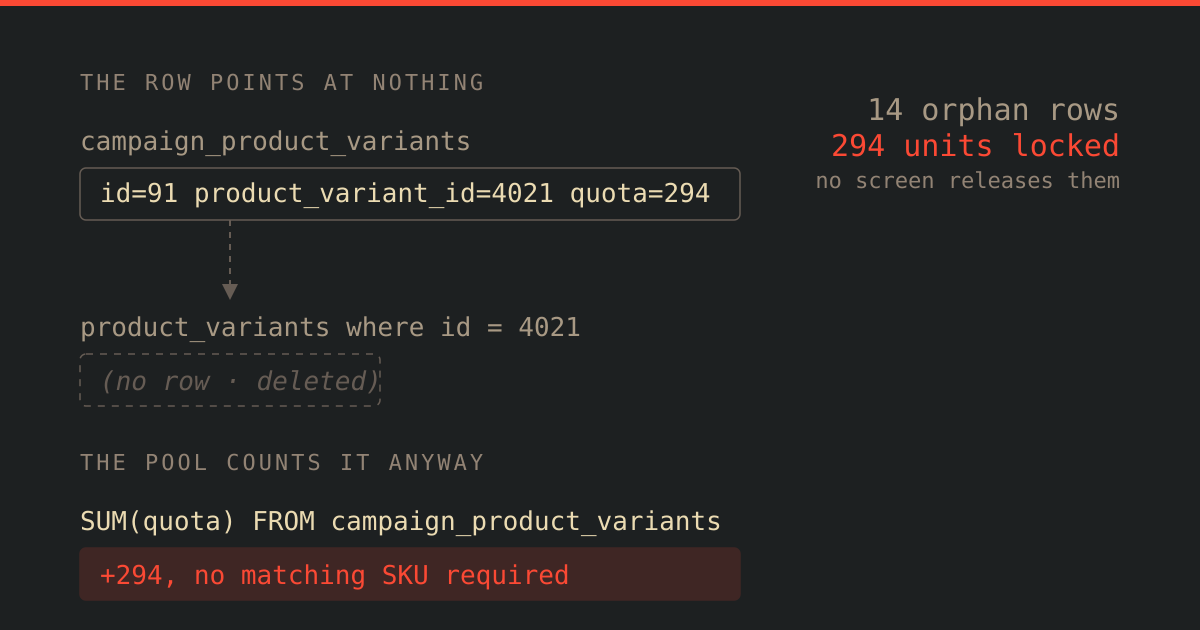
A table called campaign_product_variants had no foreign key, no ON DELETE CASCADE, and no deleted_at. Before the shared pool existed, that was a cosmetic problem: a handful of rows pointing at SKUs that no longer existed made a report look a few units smaller than reality. I never saw anyone treat that as a bug, and I did not go back through old tickets to check. Then we shipped a shared stock pool — several campaigns drawing quota from one pool per SKU — and the same orphaned rows stopped being cosmetic. On a dev database I could still poke at, 14 orphan rows were locking 294 units out of sale, permanently, with no admin screen that could select and release them. The missing foreign key had turned pre-existing technical debt into a lowered sales ceiling. ...